
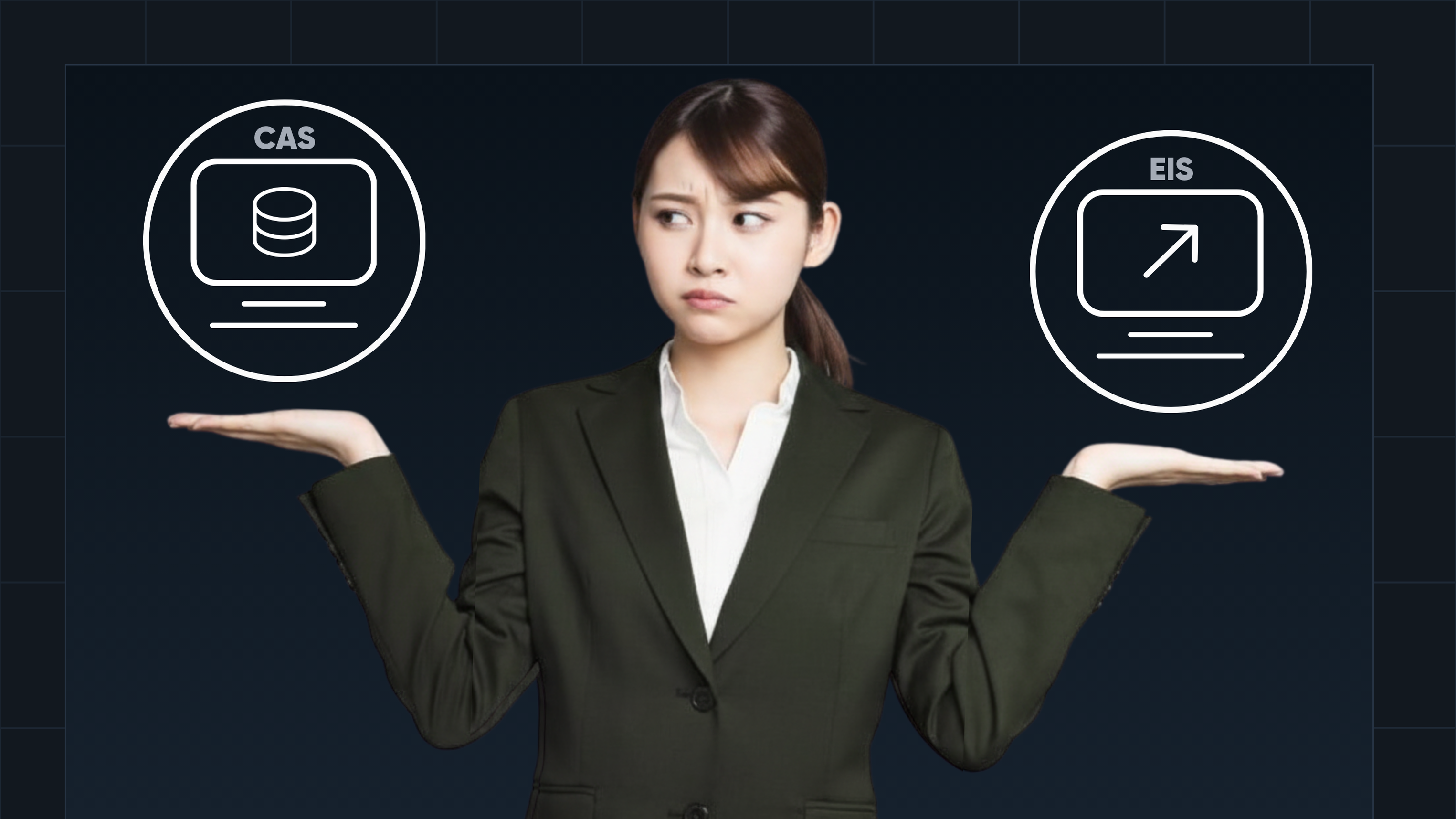
Learn the difference between the Computerized Accounting System (CAS) and the BIR Electronic Invoicing System (EIS), and why both matter for compliance.
If you’ve worked with invoicing or accounting tools, you may have come across the terms Computerized Accounting System (CAS) and E-Invoicing System (EIS). Many business owners and even accounting practitioners sometimes use these interchangeably, especially because most modern accounting platforms can generate invoices electronically.
However, while they are related, CAS and EIS are not the same. And more importantly, the Bureau of Internal Revenue (BIR) treats them differently in terms of compliance.
This article aims to explain the difference in simple terms and help you know exactly what your business needs today and how to plan.
What is a Computerized Accounting System (CAS)?
A Computerized Accounting System refers to any software used to record, track, and store your financial transactions. Examples include accounting platforms such as Juan Accounting or ERP systems like SAP, Oracle, and NetSuite.
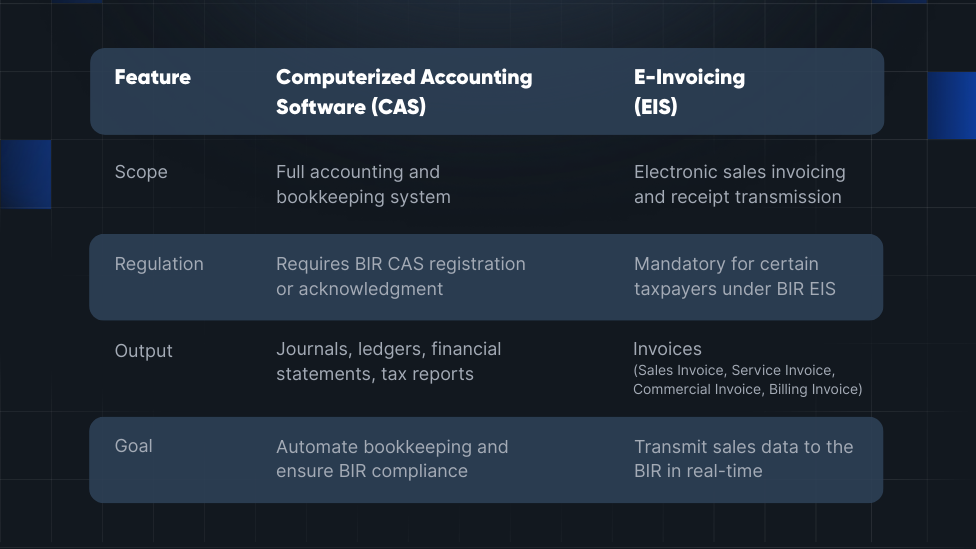
Think of CAS as your day-to-day accounting and record-keeping system. It typically covers recording of sales and expenses, producing sales or service invoices, credit notes, and debit notes, generating VAT and tax-related reports, producing financial statements, and storing books of accounts in digital format.
Its goal is to help your business stay organized and accurate.
Yes, CAS can produce digital invoices. But producing an invoice digitally does not automatically mean it meets EIS compliance.
Learn more: What is a Computerized Accounting System (CAS)
What is the BIR E-Invoicing System (EIS)?
The move toward e-invoicing actually started with the TRAIN Law of 2018, which gave the BIR the authority to require certain taxpayers to issue receipts and invoices electronically and transmit the data directly to the BIR. The idea was to modernize tax administration, reduce manual reporting, and improve transparency in recorded sales.
To put this into action, the BIR developed the E-Invoicing System (EIS), a platform where sales invoices and receipt information are sent in near real-time, and rolled out a pilot submission on July 1, 2022.
The first groups required to comply under Revenue Regulation No. 8-2022 and further enhanced by Revenue Regulation No. 11-2025 to include:
- Large Taxpayers
- Businesses engaged in e-commerce or digital services
- Exporters of goods or services
- Taxpayers using CAS, CBA with electronic invoicing, or other invoicing software
These taxpayers must transmit invoice data to the BIR using the standardized format and approved system connection.
So while CAS is focused on your internal accounting and documentation, EIS is about reporting your sales data to the government as invoices are issued. Think of EIS as the BIR’s copy of your sales documents, possibly in real time.
Why Do Businesses Confuse CAS with EIS?
Many CAS tools (including Juan) allow businesses to create and send invoices digitally and online, track payments, and maintain digital books. This often leads to the misunderstanding that issuing invoices digitally makes you EIS-ready. Once the BIR allows CAS to connect to an EIS, you can send your accounting and invoicing data to the BIR in one easy step. But for now, they are two distinct systems.
Do You Need Both CAS and E-Invoicing?
No. Only certain taxpayers need both CAS and E-Invoicing
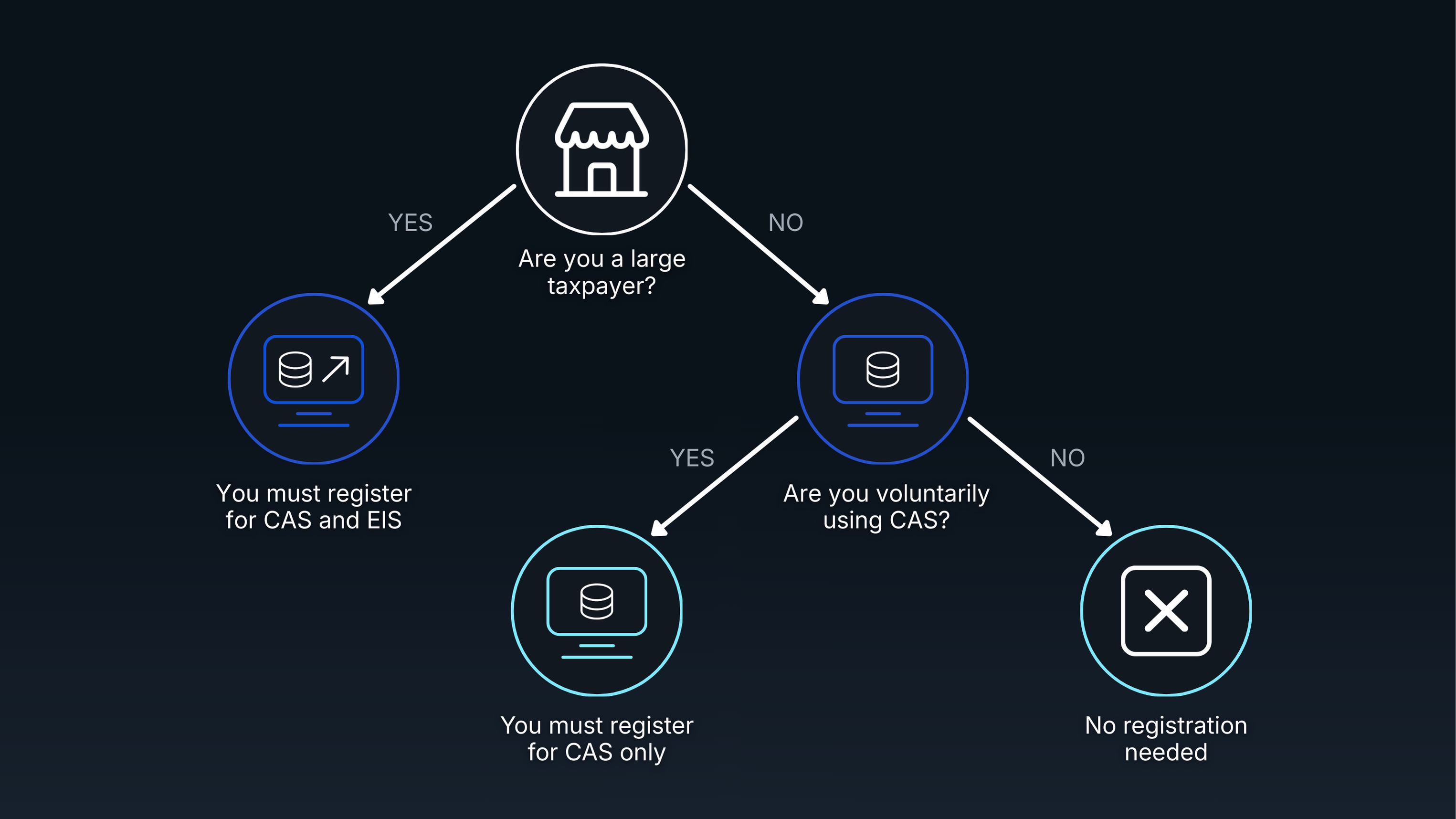
You might need both systems down the line. CAS is gradually being implemented for more businesses, while EIS is still limited to certain taxpayers.
If you’re running an MSME, e-invoicing may not be required yet—but registering your CAS now can save you headaches later. Talk to us today, and we’ll guide you through it.

.png)